Unbreakable Kherson
Ukrainian Wartime Resilience Lessons for EuropeWhen Ukrainian forces liberated Kherson on November 11, 2022, after eight months of Russian occupation, they found a city that lacked power, water, heating, communications, and other necessities of life. Retreating Russian forces had methodically sabotaged the civilian infrastructure. They destroyed every major power transformer substation and left the gas network set to ignite when re-pressurized. They destroyed and mined the water pumping station that fed the city. They looted medical equipment, knocked down cell towers, blew up bridges, and abducted children. Within hours of their withdrawal, the same Russian forces began shelling the city from across the Dnipro River, and they have not stopped since.
What the Kherson Regional Military Administration and the people of the region did over the next three and a half years, and what that work teaches Europe about preparing for the kind of warfare it may yet face, is the subject of Unbreakable Kherson.
The book is jointly written by experts at the German Marshall Fund’s Strategic Democracy Initiatives (Valeriia Ivanova, Josh Rudolph, Ayleen Cameron, and Sofiia Kozak) and senior officials of the Kherson Regional Military Administration (Governor Oleksandr Prokudin, Yaroslav Shanko, Oleksandr Tolokonnikov, and Mariia Bohodukhova). Forewords by Governor Prokudin and Howard G. Buffett frame the project. A preface by Josh Rudolph reflects on his team’s experience writing the book during the worst winter of the war. The book is the product of sustained GMF research on the ground in Kherson, including field interviews with the governor, military officials, deputy mayors, a maternity hospital director, the official coordinating the response to the Kakhovka Dam catastrophe, an emergency rescue leader, a farmer, schoolteachers, and mothers. On-site photography from that fieldwork is reproduced throughout the book.
Across 32 chapters organized into seven thematic sections, the book treats civilian preparedness as the operational discipline to face down persistent full-scale war, not the emergency response to temporary natural disasters that European civil protection is built for. Among the working systems it documents: the demining program that has cleared more than three-quarters of the region’s territory, anti-drone netting first tested in Kherson and now adopted across Ukraine’s front-line cities, underground hospital wards that continued treating patients while bombs struck the same building above, digital systems that allowed a regional government to keep functioning after its offices were destroyed, and Kherson’s three-tierpassive protection model for critical energy infrastructure. Each chapter ends with concrete policy proposals for the EU institutions and national governments now redesigning their own preparedness frameworks.
The recommendations in Unbreakable Kherson form the working agenda of the Unbreakable Europe Task Force, a new policy refinement and adoption platform coordinated by the German Marshall Fund and intended to be anchored within EU institutions. Together, Unbreakable Kherson and the Task Force are how Kherson’s experience becomes Europe’s preparation.
Purchase the book
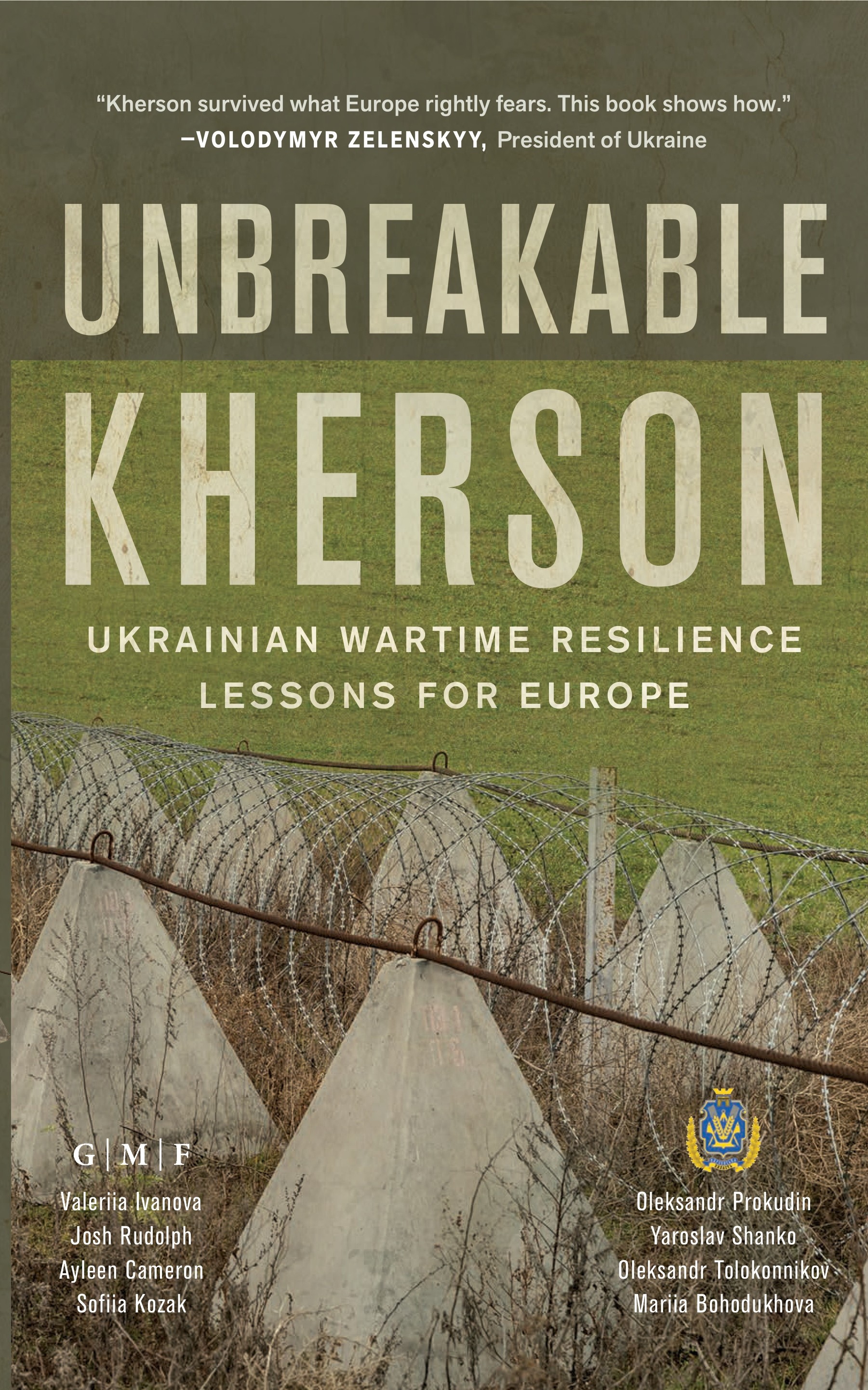
“Kherson survived what Europe rightly fears. This book shows how.”
—VOLODYMYR ZELENSKYY, President of Ukraine